
The Rise of Data-First Healthcare
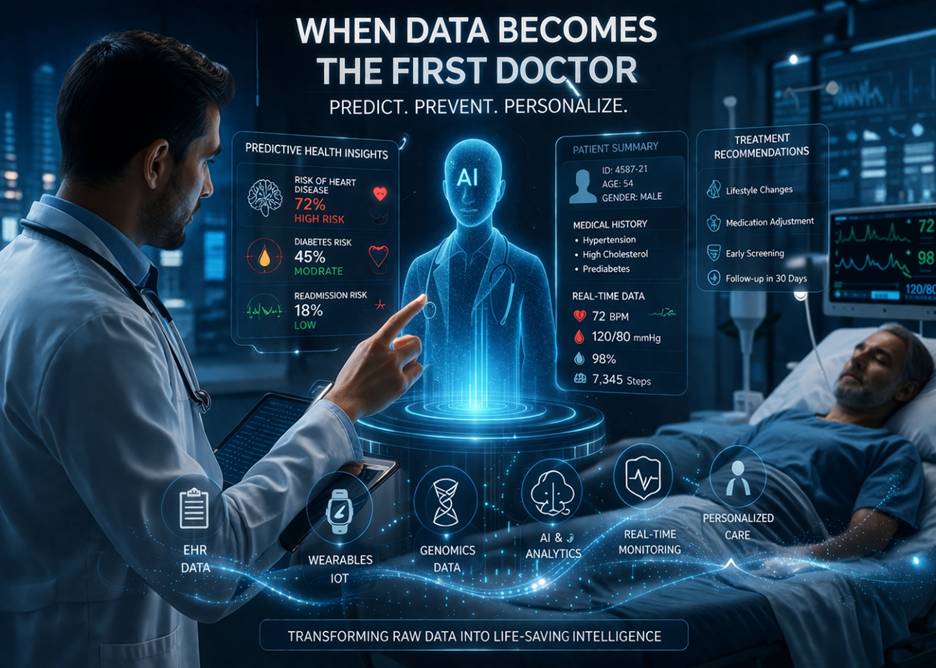
Healthcare is undergoing a fundamental transformation. In 2026, data is no longer just a supporting asset—it is becoming the first point of diagnosis, prediction, and decision-making.
Driven by exponential growth in health data, artificial intelligence (AI), and predictive analytics, the industry is shifting from reactive care to proactive, intelligence-driven healthcare ecosystems. Organizations that once relied on retrospective research are now investing in predictive intelligence to anticipate patient needs before symptoms appear.
This is not evolution—it is a complete paradigm shift.
1. From Research to Predictive Intelligence
Traditional healthcare market research focused on understanding past behaviors. Today, the focus is on forecasting future outcomes.
Predictive analytics is rapidly becoming the backbone of healthcare decision-making, enabling:
- Early disease detection
- Risk stratification of patient populations
- Optimization of treatment pathways
The global predictive analytics market in healthcare is expected to grow at a remarkable pace, fueled by the need for cost efficiency and improved outcomes.
Key Insight:
Healthcare organizations are no longer asking “What happened?”
They are asking “What will happen next—and how do we act on it?”
2. The Explosion of Healthcare Data
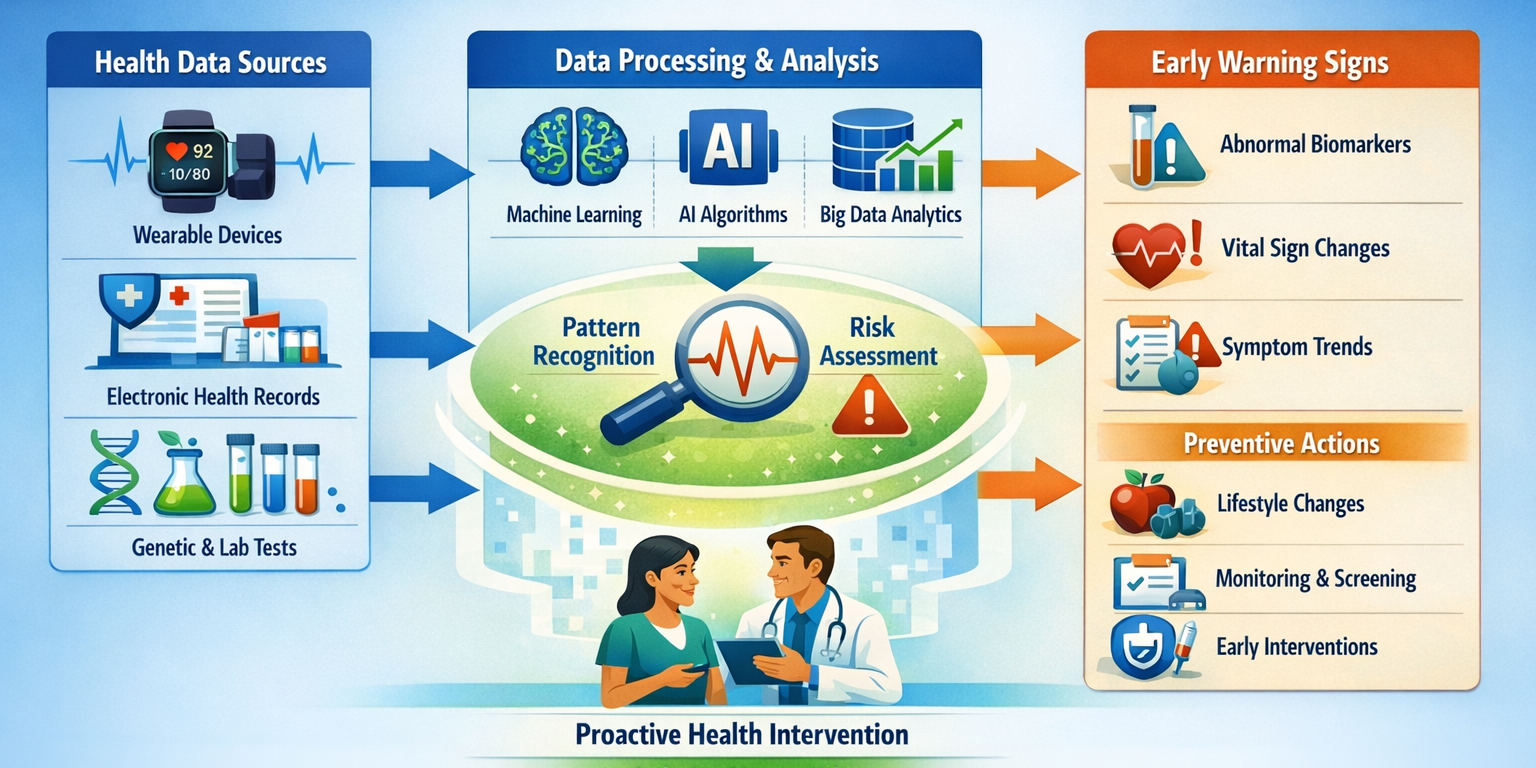
Healthcare has become one of the most data-intensive industries globally. Data now flows from:
- Electronic Health Records (EHRs)
- Wearables and IoT devices
- Genomics and biomarker research
- Real-time patient monitoring systems
This data explosion is both an opportunity and a challenge, unlocking powerful insights while increasing complexity and governance risks.
Strategic Implication:
The competitive advantage no longer lies in access to data—but in the ability to structure, validate, and activate it effectively.
3. AI Moves from Pilot to Core Infrastructure
In 2026, AI is no longer experimental. It is embedded across healthcare systems as a core operational layer.
Key applications include:
- Clinical decision support systems
- Automated diagnostics
- Workflow optimization
- Revenue cycle intelligence
AI-powered predictive models are now capable of identifying high-risk patients and preventing costly outcomes such as hospital readmissions.
Trend Shift:
From “AI as a tool” → to “AI as infrastructure.”
4. The Shift to Preventive and Personalized Care
Healthcare is moving decisively toward:
- Preventive medicine
- Personalized treatment plans
- Continuous patient monitoring
Predictive analytics enables providers to intervene earlier, often before a condition becomes critical, significantly improving outcomes and reducing costs.
Result:
The system evolves from episodic care → continuous care.
5. Value-Based Care and Market Research Evolution
The transition to value-based care models is reshaping how healthcare organizations measure success.
Instead of volume, the focus is on:
- Patient outcomes
- Cost efficiency
- Population health management
This shift is accelerating demand for advanced analytics and real-time insights, replacing static research reports with dynamic intelligence platforms.
Market Research Evolution:
- From periodic surveys → to continuous data streams
- From static insights → to real-time dashboards
- From descriptive → to prescriptive analytics
6. Digital Patient Experience Becomes a Competitive Edge
Patients in 2026 expect:
- Seamless digital interactions
- Personalized healthcare journeys
- Instant access to insights and care
Organizations are investing heavily in data-driven patient engagement strategies, making experience a key differentiator in healthcare delivery.
7. Key Challenges: Data Quality, Privacy, and Integration
Despite rapid innovation, critical challenges remain:
- Data silos limiting interoperability
- Data quality issues affecting research accuracy
- Privacy and regulatory pressures
- Integration complexity across systems
These challenges highlight a crucial reality:
Bad data leads to bad decisions—at scale.
Conclusion: Data as the New Frontline of Healthcare
In 2026, data is not just supporting healthcare—it is leading to it.
The organizations that will dominate this new era are those that can:
- Transform raw data into predictive intelligence
- Integrate AI seamlessly into operations
- Maintain the highest standards of data quality and governance
The future of healthcare is no longer reactive.
It is predictive, personalized, and powered by data.