
Healthcare is entering a new era—one where care is no longer just reactive, but predictive, personalized, and proactive. At the center of this shift is an emerging concept with transformative potential: the Smart Health Twin.
Unlike traditional digital health records, a Smart Healthy Twin is a living, intelligent digital representation of a patient, continuously updated with real-world data to support better clinical and surgical decisions.
What Is a Smart Health Twin?
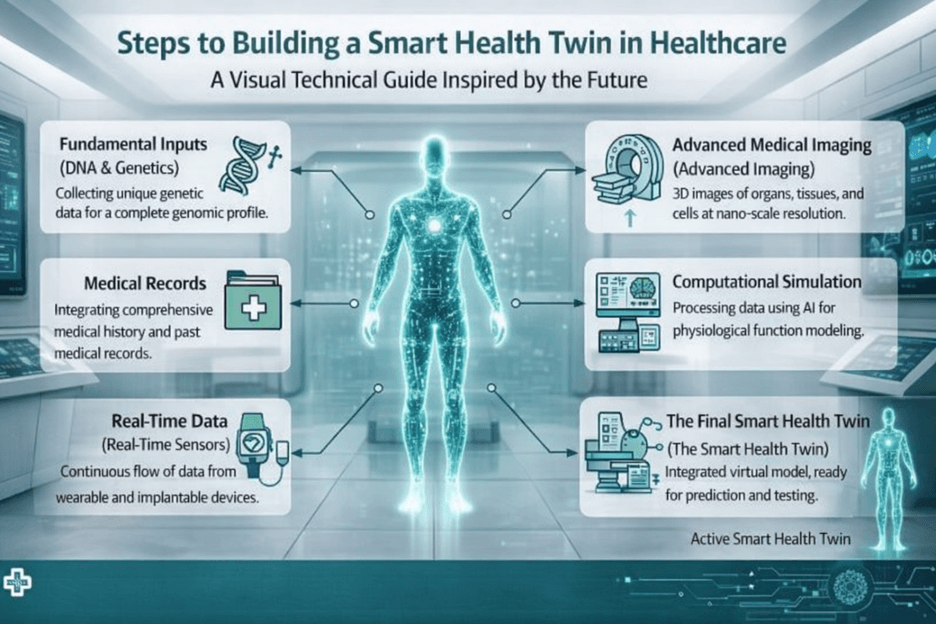
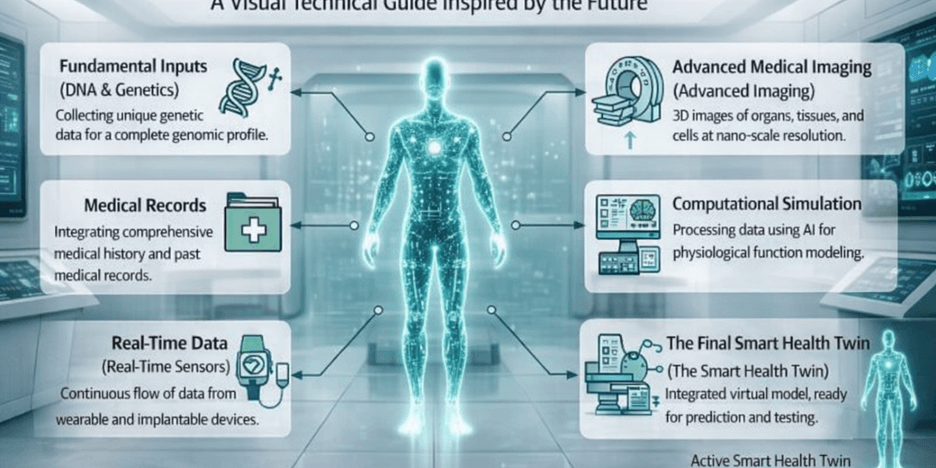
A Smart Health Twin combines multiple data layers into one unified, dynamic model, including:
- Clinical history and EHR data
- Medical imaging (CT, MRI, ultrasound)
- Physiological data from wearables and devices
- AI-driven analytics and simulations
The result is not just data visualization—but a decision-support tool that can simulate outcomes, predict risks, and guide care at the individual level.
Smarter, More Predictive Patient Care
In patient care, Smart Healthy Twins enable clinicians to move beyond population averages toward Truly Personalized Medicine.
They can help:
- Identify early risk signals before symptoms escalate.
- Predict disease progression under different treatment scenarios.
- Tailor care plans to each patient’s unique profile
For chronic disease management, this means fewer surprises, earlier interventions, and better long-term outcomes.
Transforming Surgical Planning and Outcomes
Surgery is where Smart Healthy Twins deliver some of their most immediate value.
🔹 Preoperative Simulation
Surgeons can virtually rehearse procedures using a patient-specific model, testing approaches, and minimizing uncertainty.
🔹 Personalized Surgical Strategies
Every anatomy is different. Twins allow procedures, implants, and techniques to be tailored to the individual—not the average patient.
🔹 Postoperative Monitoring
After surgery, the twin evolves with the patient, helping care teams track recovery, detect complications early, and optimize rehabilitation. The result Higher precision, improved safety, and better outcomes.
Why It Matters for Healthcare Systems
Smart Health Twins don’t just benefit patients; they impact the entire ecosystem:
- Clinicians gain advanced decision support.
- Hospitals improve efficiency and reduce complications.
- Payers see better cost predictability.
- Researchers can simulate care pathways ethically and efficiently.
This aligns perfectly with the shift toward value‑based, outcome‑driven healthcare.
Challenges to Address
Adoption will require careful focus on:
- Data interoperability and quality
- Privacy, security, and ethical AI use
- Clinical validation and regulatory alignment
Technology alone isn’t enough success depends on trust, governance, and integration into real clinical workflows.
Conclusion
The Smart Health Twin represents more than just a technological advancement, it marks a fundamental shift in how healthcare is delivered, experienced, and optimized.
By transforming fragmented patient data into a dynamic, intelligent model, Smart Health Twins enable a new level of precision in both care and surgery. They empower clinicians to anticipate risks, personalize treatments, and make more informed decisions with greater confidence.
From improving surgical outcomes to enabling proactive disease management, the impact extends across the entire healthcare ecosystem patients, providers, payers, and researchers alike.
However, unlocking this full potential requires more than innovation. It demands robust data integration, strict governance, and a strong commitment to ethical and clinical standards.
As healthcare continues to evolve toward a value-based, outcome-driven, personalized care model, Smart Health Twins are not just an option they are becoming a strategic necessity for organizations aiming to lead the future of medicine.