

Egypt’s pharmaceutical manufacturing sector is undergoing a structural transformation. Long known as a generic’s powerhouse serving domestic and regional markets, Egypt is now deliberately moving toward innovation-driven manufacturing, encompassing complex generics, biosimilars, vaccines, and higher-value pharmaceutical technologies. This shift is shaped by regulatory reform, industrial consolidation, public–private partnerships, and lessons learned from supply chain shocks such as COVID‑19. Together, these forces are redefining Egypt’s role from a low-cost producer to a regional pharmaceutical hub with emerging innovation capacity.
1. The Generics Foundation: Scale Before Innovation
For decades, Egypt’s pharmaceutical industry focused on volume and affordability. Local manufacturers supplied over 90% of the domestic market by volume, ensuring access to essential medicines for a population exceeding 100 million. This model relied heavily on:
- Reverse engineering of off‑patent medicines
- Large public-sector manufacturers (e.g., El‑Nasr, CID, Arab Co.)
- Cost-sensitive pricing and limited R&D expenditure
While this approach strengthened medicine access and built manufacturing scale, it created structural limits. Most firms invested minimally in research, clinical trials, or advanced technologies, restricting Egypt’s ability to compete in high‑value segments such as biologics or novel formulations.
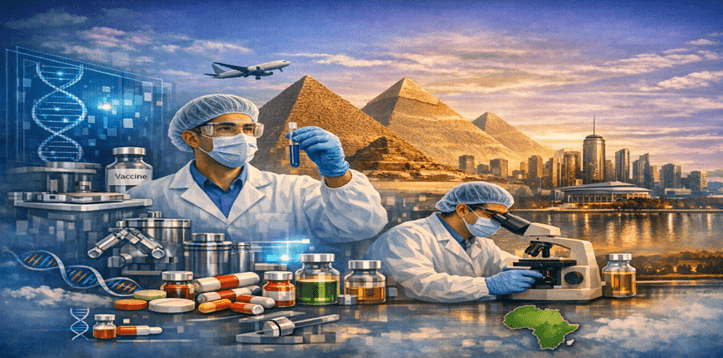
Key insight: The generics era built industrial capacity and talent—but not innovation pipelines.
2. Regulatory Reform: Laying the Groundwork for Innovation
A decisive turning point came with the creation of the Egyptian Drug Authority (EDA) in 2019 (fully operational from 2020). The EDA unified drug regulation, inspection, pricing, and pharmacovigilance under a single entity, aligned more closely with WHO and ICH standards.
This reform delivered several innovation‑enabling effects:
- Clearer pathways for clinical trials and biosimilar
- Faster, more predictable registration timelines
- Improved confidence among multinational partners
- Stronger post‑marketing surveillance and GMP enforcement
Regulatory modernization was critical: innovation cannot scale without regulatory credibility. Egypt’s improved standing with WHO and African regulators also supports export ambitions.
3. Industrial Consolidation and State Strategy
In parallel, the government consolidated public pharmaceutical assets under Egypt Pharma Holding Company, signaling a shift from fragmented state ownership to strategic industrial management. Objectives included:
- Modernizing aging factories
- Localizing production of strategically sensitive medicines
- Reducing foreign currency pressure from imports
- Supporting exports to Africa and the Middle East
At the same time, leading private firms—such as EVA Pharma, EIPICO, Pharco, and Sedico—expanded investment in sterile injectable, oncology products, and advanced oral dosage forms. This dual-track model combines state-led resilience with private-sector competitiveness.
4. Transition to Complex Generics and Biosimilars
Egypt’s most visible move toward innovation is in complex generics and biosimilars. These products require:
- Advanced analytical capabilities
- Bioequivalence and clinical studies
- Sophisticated manufacturing and quality systems
Egyptian companies have begun producing:
- Insulin and insulin analogs
- Oncology injectables
- Monoclonal antibody biosimilars (early-stage or technology-transfer based)
This marks a qualitative leap: while not original drug discovery, biosimilars represent technology-intensive innovation, bridging the gap between generics and novel drug development.
5. Vaccines and Biotechnology: COVID‑19 as a Catalyst
The COVID‑19 pandemic accelerated Egypt’s innovation trajectory. Partnerships—most notably between VACSERA and Sinovac—enabled local production of COVID‑19 vaccines, strengthening Egypt’s biotechnology infrastructure and know-how.
Beyond pandemic response, vaccine manufacturing has strategic implications:
- National health security
- Export potential to Africa
- Platform development for future biologics
The crisis demonstrated that localized advanced manufacturing is not optional—it is strategic.
6. Export Ambitions and Regional Leadership
Egypt is positioning itself as a pharmaceutical gateway to Africa, supported by:
- Competitive manufacturing costs
- Large-scale production capacity
- Improved regulatory alignment
- Geographic proximity to African and Arab markets
Egyptian medicines are exported to over 60 countries, with growing focus on sub‑Saharan Africa amid the African Continental Free Trade Area (AfCFTA). Success, however, will depend on quality differentiation—not price alone—given competition from India, Turkey, and China.
7. Remaining Challenges
Despite clear progress, structural gaps remain:
- Limited original drug discovery and early-stage R&D
- Heavy reliance on imported APIs
- Weak integration between academia and industry
- Shortage of advanced biotech talent at scale
Bridging these gaps will require:
- Long-term R&D financing mechanisms
- Stronger IP frameworks and incentives
- Translational research programs
- Talent development in bioprocessing and clinical research
Conclusion
Egypt’s pharmaceutical manufacturing revolution is real and ongoing. The country has moved decisively beyond a pure generics model toward technology-intensive and strategically innovative production. While Egypt is not yet a global pharmaceutical innovator, it is emerging as a regional center for complex manufacturing, biosimilars, and vaccines—with the scale, regulatory maturity, and policy direction to go further.